② Two-Track Strategy Targeting Inpatients and Outpatients with On-Device, Multi-Parameter Technology
[DealSite Reporter Da-eun Lee]
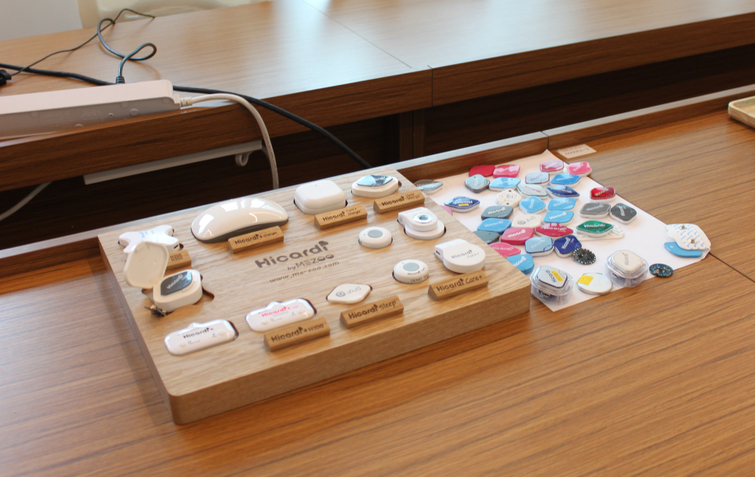
Mezoo, once considered a latecomer in remote monitoring, is seeking to reshape the market landscape by leveraging its real-time biosignal measurement (aRPM) technology. While existing competitors rely on large-scale equipment or measure only a single indicator, Mezoo’s “HiCardi” differentiates itself by simultaneously measuring key vital signs—such as ECG, body temperature, respiration, and oxygen saturation—using a single wearable device capable of on-device computation.
In Korea, the remote monitoring market is led by Seers Technology, while overseas players include iRhythm, Philips, and Medtronic. Seers entered the domestic market quickly with its “MobiCare Patch,” but it requires separate patches to measure different parameters, creating inconvenience for both clinicians and patients.
iRhythm’s ZIO product line, which originated from wearable Holter monitoring, relies heavily on cloud-based computation, resulting in limitations in battery efficiency and real-time performance. Philips and Medtronic offer stable solutions centered on large-scale equipment, but their high cost and fixed configurations are seen as constraints when expanding into wearable and home-based monitoring.
Mezoo’s strategy is to exploit these gaps with differentiated technology. The core lies in low-power, on-device machine learning. Whereas most wearables depend on cloud computation and suffer from high battery consumption, Mezoo enables real-time processing directly on the device through optimized proprietary algorithms. As a result, the system achieves high energy efficiency, allowing up to 72 hours of continuous use with just one hour of charging.
https://dealsite.co.kr/articles/149107

